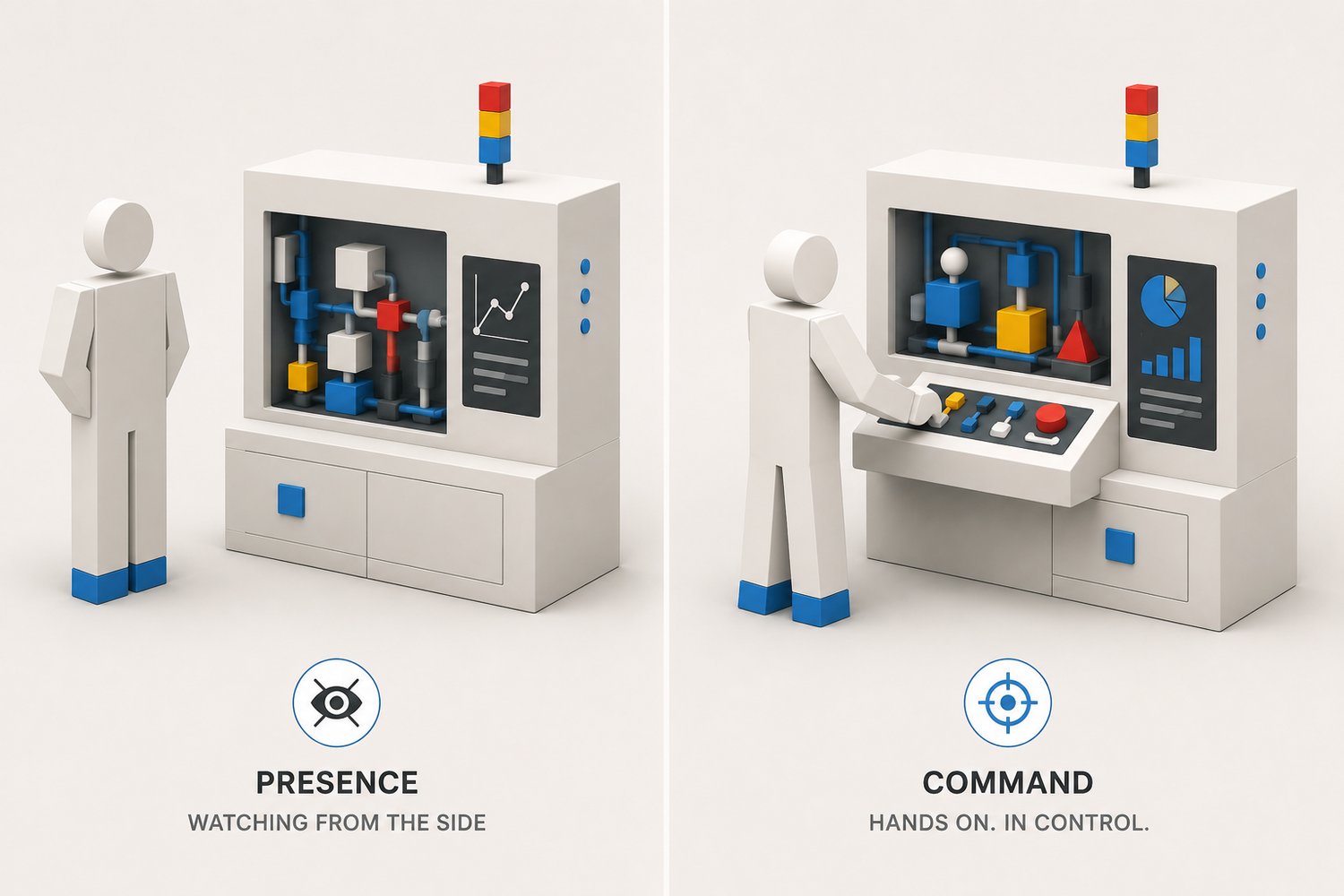
Provable versus performed oversight
There is a real difference between proving a human was present and proving a human was in command. Most oversight, even the kind with a cryptographic receipt, proves the first and quietly skips the second.
What is the difference between provable and performed oversight?
Performed oversight produces the appearance of a human in the loop: a logged presence, a recorded sign-off, sometimes a tamper-proof attestation that a person was there. Provable oversight would prove something harder, that the human actually changed what the system did. The gap between them is the whole game. You can have an unforgeable proof that a human clicked, and still have no evidence that the click meant anything. Measured, meaningful oversight is the part that matters, and it is the heart of what I mean by human judgment infrastructure.
Performed oversight
This is the common case: a system can show that a human was present and approved. It satisfies an auditor's checklist and a buyer's question. What it cannot show is whether the human could have said no and ever did. A confirm button pressed a thousand times produces a thousand proofs of presence and zero proof of judgment.
Why proving presence is not proving command
Some approaches lean hard on cryptographic proof that a human was in the loop, and that technology is genuinely useful for what it does: it makes presence and attestation hard to fake. But it answers "was a human there," not "did the human decide." A perfectly proven presence sitting on top of a reflexive approval is still theater, now with a certificate. Proof of presence is not proof of command, however strong the cryptography. The honest claim is the measured one: of the decisions a human could have changed, how many did they.
What to prove instead
Prove the use, not the attendance. The Meaningful Override Rate measures whether the human changed outcomes; its companions check that the changes were timely and correct. That is a harder thing to show, because it can come back unflattering, which is exactly why it is worth showing.
Read on
See the Meaningful Override Rate and the larger argument, Human Oversight Is Mostly Theater.