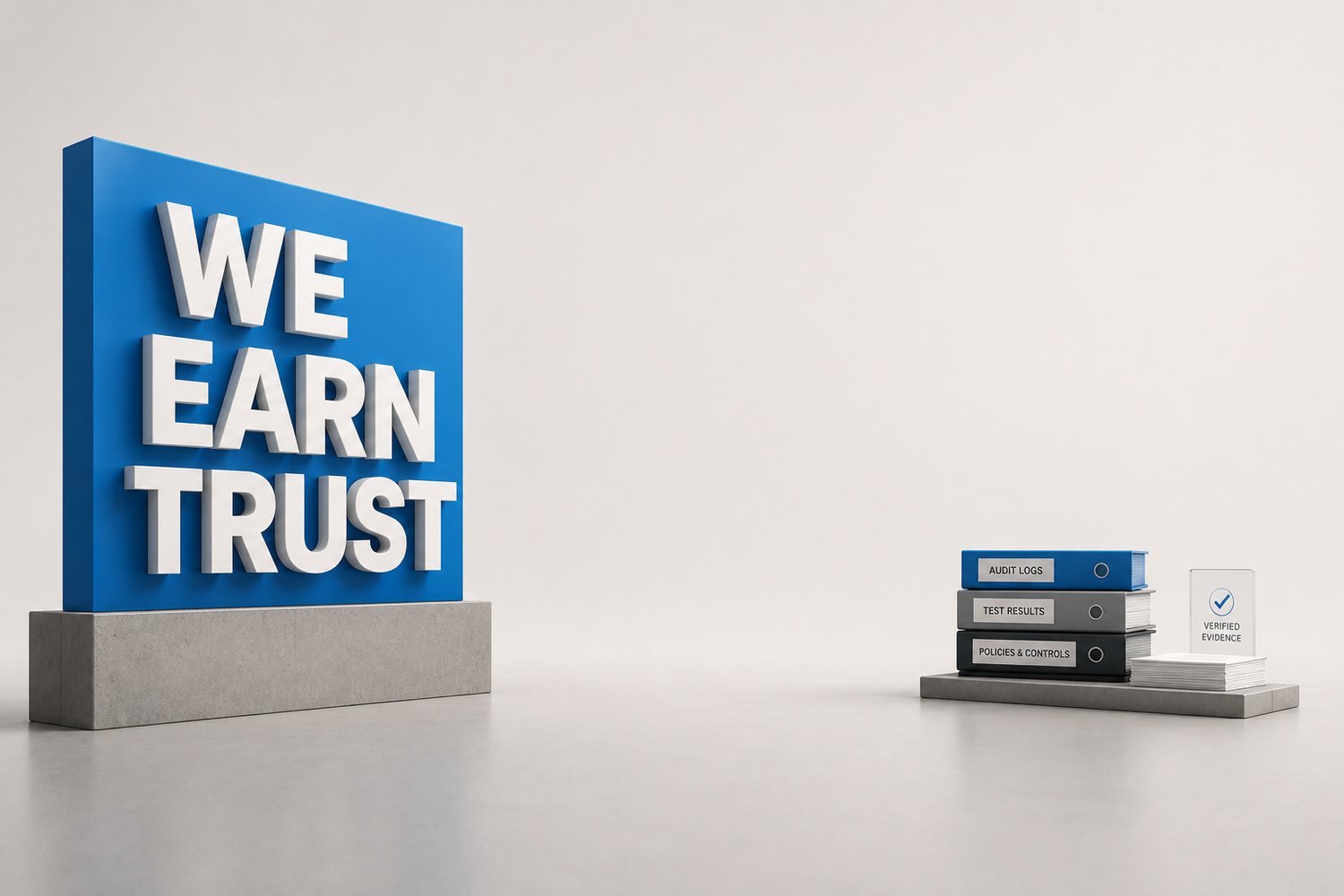
The AI trust deficit
Say "responsible AI" to an experienced buyer now and watch the small flicker of doubt. The phrase has been used too often by systems that were not, and the discount is now applied automatically.
Why do buyers no longer trust 'responsible AI' claims?
There is a trust deficit in AI, and it is earned. For years the language of responsible and trustworthy AI ran well ahead of the practice, applied to systems with no real oversight, no auditability, and no recourse. Buyers noticed, and now they discount the claim by default. The deficit is not cynicism, it is hard-won experience: people have updated on a pattern. The only thing that closes it is the thing the slogans skipped, which is proof, and providing it is the work of real human judgment infrastructure.
How the deficit formed
Through repetition without substance. Each time a trust claim turned out to be paint over an unaccountable system, the words lost a little value, until the words and the substance fully decoupled. That is how a phrase becomes a liability: not because it is false in every case, but because it is unverifiable in most, so the careful buyer assumes the worst.
Closing it with proof, not louder claims
You do not fix a trust deficit by saying "trustworthy" more emphatically. You fix it by being checkable: showing measured oversight, real auditability, and working recourse, and inviting the scrutiny the slogan-users avoid. The companies that do this will stand out precisely because the baseline has become disbelief.
We do not argue about the sanctity of human intelligence. We build the human judgment infrastructure that makes oversight measurable: cryptographic proof says a human was there, measured oversight says the human mattered, and the second is the one we own.
Read on
See trust is engineered, not advertised and what trustworthy AI requires.