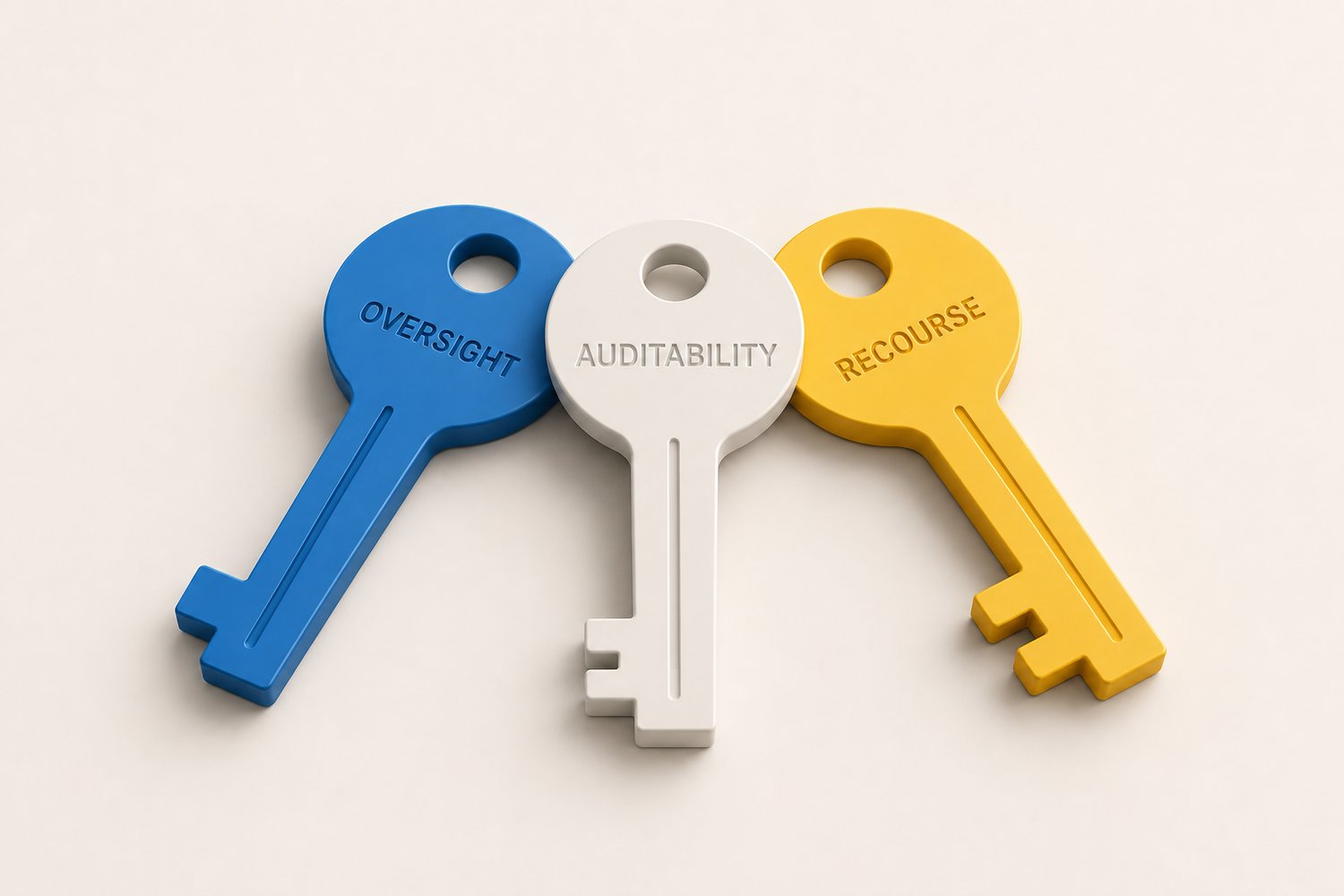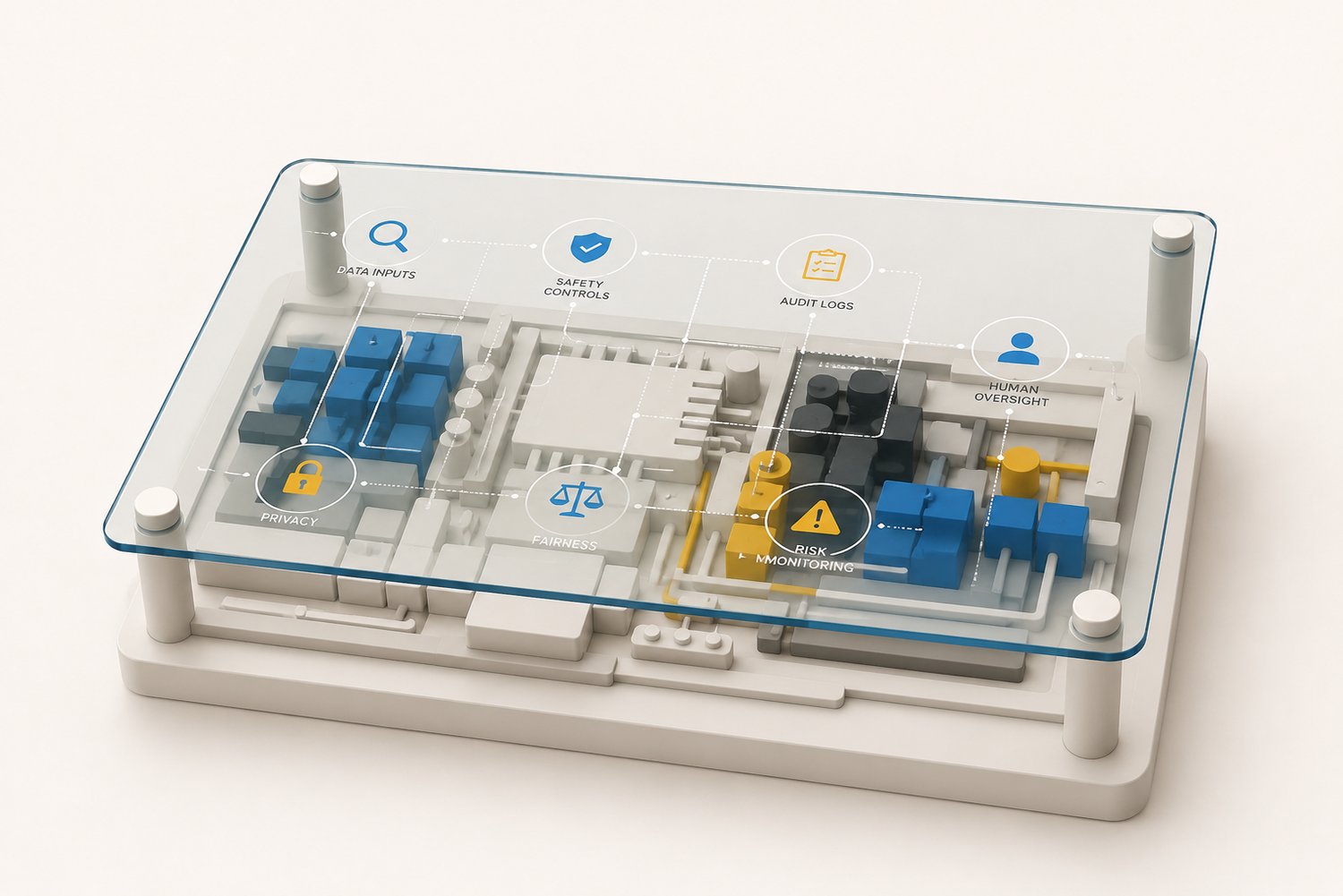
Reliability engineering gave us uptime, a number you can check instead of a promise you have to take. AI needs the same move for trust: a layer that produces evidence, so trust is something you can verify rather than something you are asked to feel.
What is the trust layer for AI?
The trust layer for AI is the part of a system that makes its decisions auditable and accountable. Trust today is mostly asserted, a word on a page. The trust layer is the proposal to make it structural: to build the system so that what it did, why, and who was answerable are all recoverable by someone who does not work for the vendor. When trust rests on evidence a third party can check, it stops being a marketing claim and starts being a property.
The layer that makes an AI system's decisions auditable and accountable, so trust can rest on checkable evidence rather than the vendor's assurance.
Auditability is the new uptime
Operations teams earned trust by publishing numbers anyone could verify, not adjectives. Auditability is the equivalent for AI: the ability to reconstruct a decision and find the human behind it. A system you can audit is one you can correct, and one you can correct is one you can actually trust. The trust layer is where that capability lives.
Used carefully, not loudly
Trustworthy AI as a phrase is crowded, claimed by standards bodies and vendors alike, and I am wary of adding to the noise. The trust layer is a narrower and more honest claim: not that the system is trustworthy because we say so, but that it is built to be checked. That is the version worth standing behind.
We do not argue about the sanctity of human intelligence. We build the human judgment infrastructure that makes oversight measurable: cryptographic proof says a human was there, measured oversight says the human mattered, and the second is the one we own.
Read on
See trust is engineered, not advertised. It sits beside the values layer and the expertise layer.