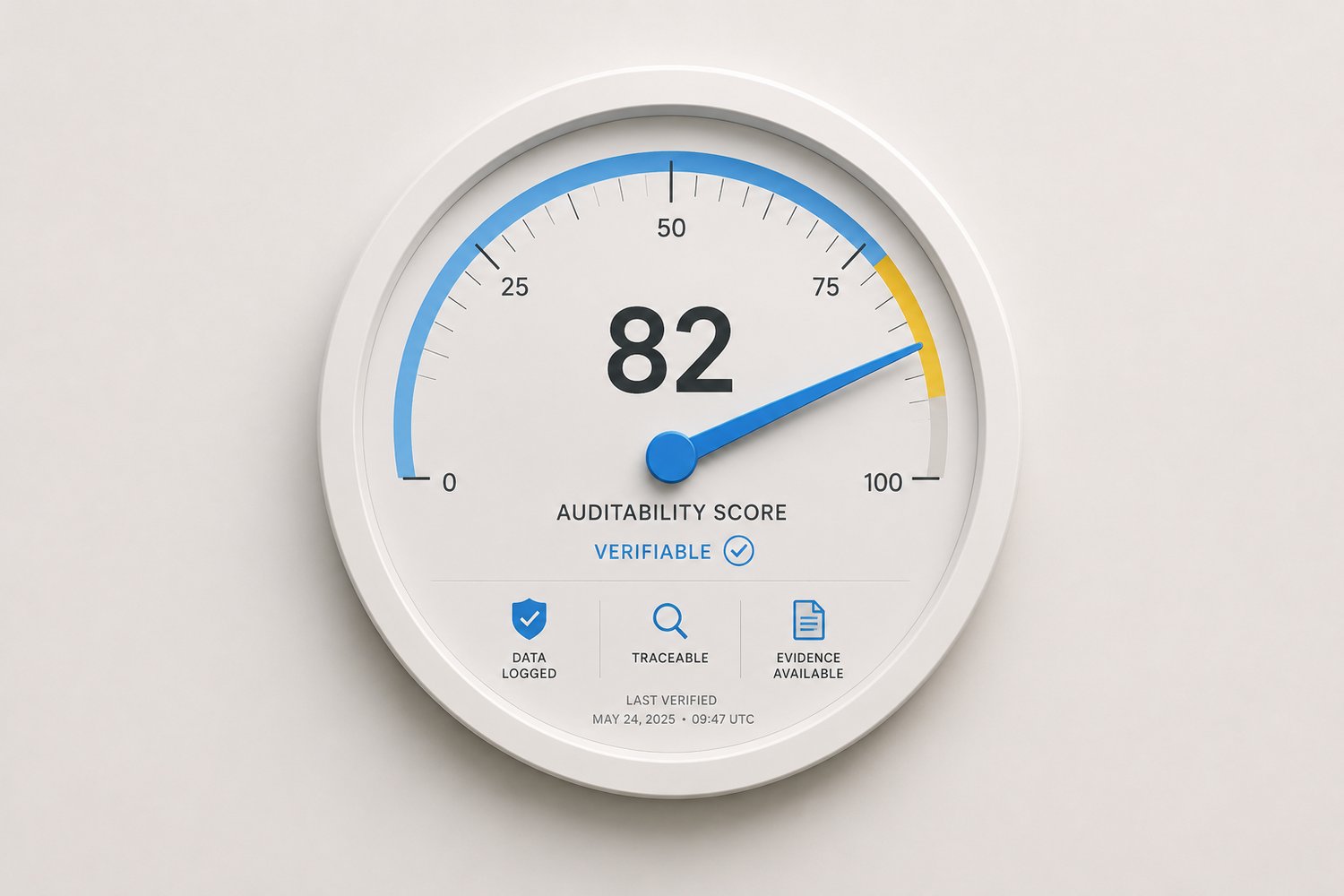
Auditability is the new uptime
A generation ago, software earned trust by publishing uptime, a number you could check instead of a promise you had to take. AI decisions need the same move, and the number is auditability.
Is auditability the new uptime for AI?
Auditability is becoming for AI what uptime was for reliability: the verifiable number that earns trust. Operations teams did not ask to be trusted, they published uptime and let anyone check it. For AI that makes decisions about people, the equivalent is whether you can reconstruct what a system did, why, and who was accountable. A system you can audit is one you can correct and answer for, and that is what turns the trust layer for AI from a slogan into a property.
The uptime analogy
Uptime worked as a trust signal because it was public, verifiable, and hard to fake over time. It moved trust from the vendor's word to a number the buyer could watch. Auditability can play the same role: not a claim of being responsible, but a demonstrated ability to be inspected after the fact.
What auditability means for a decision
That the inputs, the rule applied, the output, and the accountable human are all recoverable later, by someone who needs to know. Not a log only the vendor can read, but a record a regulator and a wronged customer could both follow. As decisions get more automated, that capability stops being a nicety and becomes the baseline expectation, the way uptime did.
A cryptographic proof shows a human was present. That is necessary and not sufficient. The harder proof is that the oversight was meaningful: the human's no could change the outcome, and sometimes did. We measure the meaning, not just the presence.
Read on
See the trust layer for AI and audit trails for AI decisions.