Essays
Notes on building trust into AI.
Essays and plain-English guides on human oversight, AI governance and the values AI should hold.
 AI governance: what it is, the frameworks, and where human oversight fits
AI governance is how organisations keep AI accountable to people: the frameworks (EU AI Act, NIST AI RMF, ISO 42001) and the human oversight that makes them real.
25 June 2026↗
AI governance: what it is, the frameworks, and where human oversight fits
AI governance is how organisations keep AI accountable to people: the frameworks (EU AI Act, NIST AI RMF, ISO 42001) and the human oversight that makes them real.
25 June 2026↗
 When does Article 14 of the EU AI Act take effect?
The EU AI Act entered into force in 2024 and its obligations are being phased in. How the Article 14 timeline works, and where to find the authoritative dates.
25 June 2026↗
When does Article 14 of the EU AI Act take effect?
The EU AI Act entered into force in 2024 and its obligations are being phased in. How the Article 14 timeline works, and where to find the authoritative dates.
25 June 2026↗
 EU AI Act Article 14: human oversight, explained
A plain-English guide to Article 14 of the EU AI Act: what human oversight of high-risk AI requires, who must comply, the oversight measures, and how to meet it. Cited to the primary law.
25 June 2026↗
EU AI Act Article 14: human oversight, explained
A plain-English guide to Article 14 of the EU AI Act: what human oversight of high-risk AI requires, who must comply, the oversight measures, and how to meet it. Cited to the primary law.
25 June 2026↗
 What does meaningful human oversight mean under the EU AI Act?
Article 14 requires effective human oversight, not a rubber stamp. What meaningful human oversight actually means, and how to tell it from theater.
25 June 2026↗
What does meaningful human oversight mean under the EU AI Act?
Article 14 requires effective human oversight, not a rubber stamp. What meaningful human oversight actually means, and how to tell it from theater.
25 June 2026↗
 The Article 14 oversight measures, explained
Article 14(4) lists what a human overseeing a high-risk AI system must be able to do, and 14(5) adds a two-person rule for certain biometric systems. Explained in plain terms.
25 June 2026↗
The Article 14 oversight measures, explained
Article 14(4) lists what a human overseeing a high-risk AI system must be able to do, and 14(5) adds a two-person rule for certain biometric systems. Explained in plain terms.
25 June 2026↗
 What is Article 14 of the EU AI Act?
Article 14 of the EU AI Act requires high-risk AI systems to be designed for effective human oversight. A plain-English definition, cited to the primary law.
25 June 2026↗
What is Article 14 of the EU AI Act?
Article 14 of the EU AI Act requires high-risk AI systems to be designed for effective human oversight. A plain-English definition, cited to the primary law.
25 June 2026↗
 Who must comply with Article 14, providers or deployers?
Article 14 splits the human-oversight duty between providers and deployers of high-risk AI. Who does what, in plain terms, cited to the primary law.
25 June 2026↗
Who must comply with Article 14, providers or deployers?
Article 14 splits the human-oversight duty between providers and deployers of high-risk AI. Who does what, in plain terms, cited to the primary law.
25 June 2026↗
 Does AI need a constitution?
A constitution for AI is a metaphor for making a system's values explicit, written, and contestable, rather than buried in its weights. Why explicit values beat implicit ones, including the human-oversight duty as the law comes into force.
25 June 2026↗
Does AI need a constitution?
A constitution for AI is a metaphor for making a system's values explicit, written, and contestable, rather than buried in its weights. Why explicit values beat implicit ones, including the human-oversight duty as the law comes into force.
25 June 2026↗
 Can dignity be engineered into AI?
Dignity is usually an AI slogan. It can be a design constraint instead: a line decisions must not cross, built into the values layer rather than printed in the marketing.
25 June 2026↗
Can dignity be engineered into AI?
Dignity is usually an AI slogan. It can be a design constraint instead: a line decisions must not cross, built into the values layer rather than printed in the marketing.
25 June 2026↗
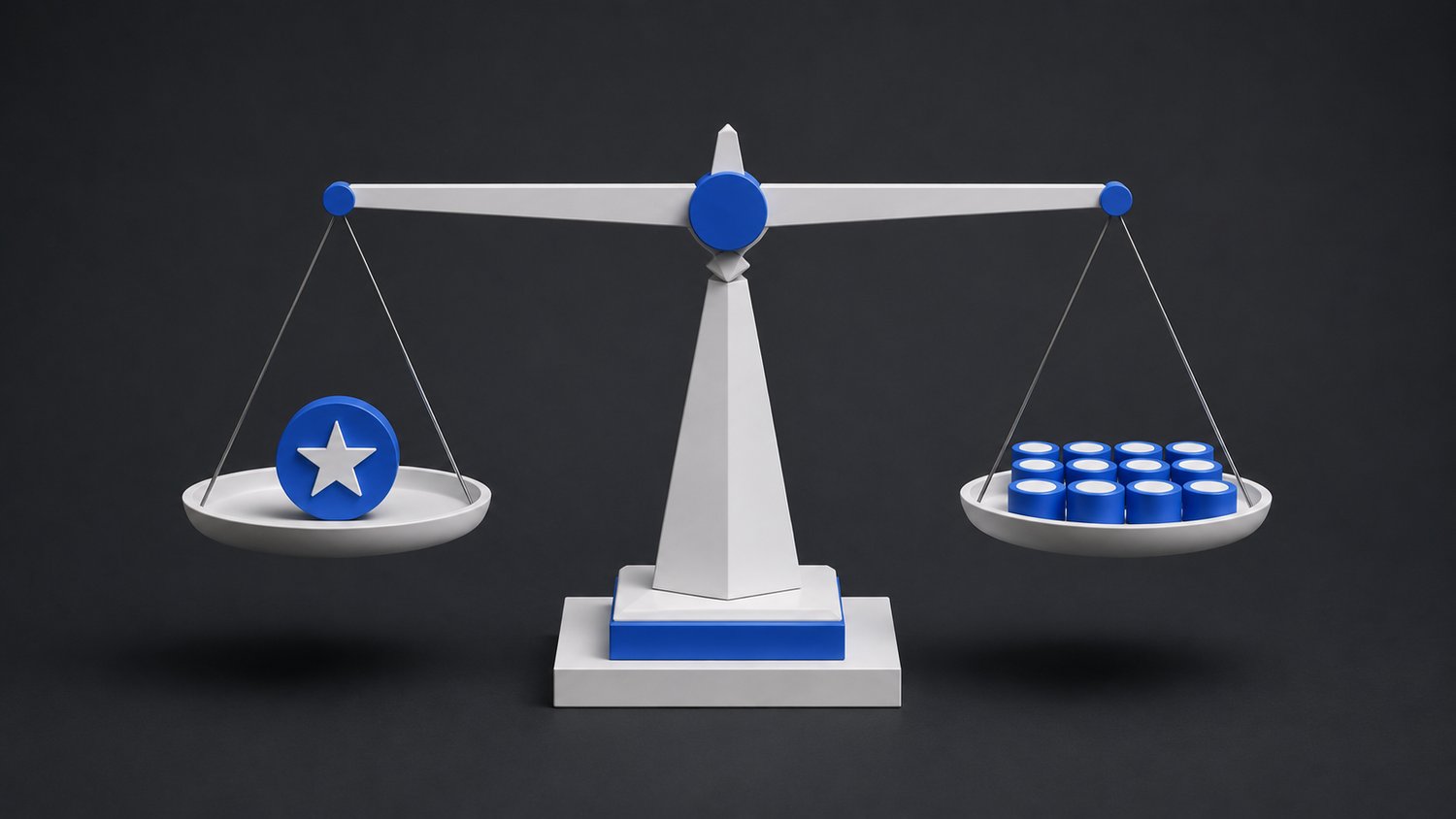 Should experts get more say over AI's values?
On questions of value, everyone should weigh equally; expertise belongs to questions with right answers. Why the distinction between facts and values decides who gets a say over AI.
25 June 2026↗
Should experts get more say over AI's values?
On questions of value, everyone should weigh equally; expertise belongs to questions with right answers. Why the distinction between facts and values decides who gets a say over AI.
25 June 2026↗
 Is every AI model an opinion?
Every AI model encodes a point of view through the data and choices that made it. Treating models as neutral hides the opinions inside them. The honest move is to ask whose.
25 June 2026↗
Is every AI model an opinion?
Every AI model encodes a point of view through the data and choices that made it. Treating models as neutral hides the opinions inside them. The honest move is to ask whose.
25 June 2026↗
 What does legitimacy mean for AI?
Legitimacy for AI means the people affected by its values have a say in them. Why accuracy is not the same as legitimacy, and what giving the governed a vote could mean for the values layer.
25 June 2026↗
What does legitimacy mean for AI?
Legitimacy for AI means the people affected by its values have a say in them. Why accuracy is not the same as legitimacy, and what giving the governed a vote could mean for the values layer.
25 June 2026↗
 Human values in AI: whose values should AI hold?
Every AI model encodes values; the honest question is whose, and who decides. Human values in AI is the problem of choosing and legitimising those values, with a human in the loop.
25 June 2026↗
Human values in AI: whose values should AI hold?
Every AI model encodes values; the honest question is whose, and who decides. Human values in AI is the problem of choosing and legitimising those values, with a human in the loop.
25 June 2026↗
 What is the values layer for AI?
The values layer for AI is the part of a system where what it should care about is made explicit and contestable, instead of inferred and hidden inside the model.
25 June 2026↗
What is the values layer for AI?
The values layer for AI is the part of a system where what it should care about is made explicit and contestable, instead of inferred and hidden inside the model.
25 June 2026↗
 What is the 'whose values' problem in AI alignment?
AI alignment usually asks how to align a model to human values, as if there were one set. The harder, neglected half is whose values. Why the 'whose' question is the one that matters most.
25 June 2026↗
What is the 'whose values' problem in AI alignment?
AI alignment usually asks how to align a model to human values, as if there were one set. The harder, neglected half is whose values. Why the 'whose' question is the one that matters most.
25 June 2026↗
 Can one AI hold values for everyone?
No single set of values fits every person and context. Value pluralism is the honest stance for AI: a values layer that can hold genuine differences rather than imposing one default on all.
25 June 2026↗
Can one AI hold values for everyone?
No single set of values fits every person and context. Value pluralism is the honest stance for AI: a values layer that can hold genuine differences rather than imposing one default on all.
25 June 2026↗
 Whose values should AI hold?
Every AI model encodes values. The honest question is not whether, but whose. The case for a values layer that is chosen in the open rather than smuggled in by default.
25 June 2026↗
Whose values should AI hold?
Every AI model encodes values. The honest question is not whether, but whose. The case for a values layer that is chosen in the open rather than smuggled in by default.
25 June 2026↗
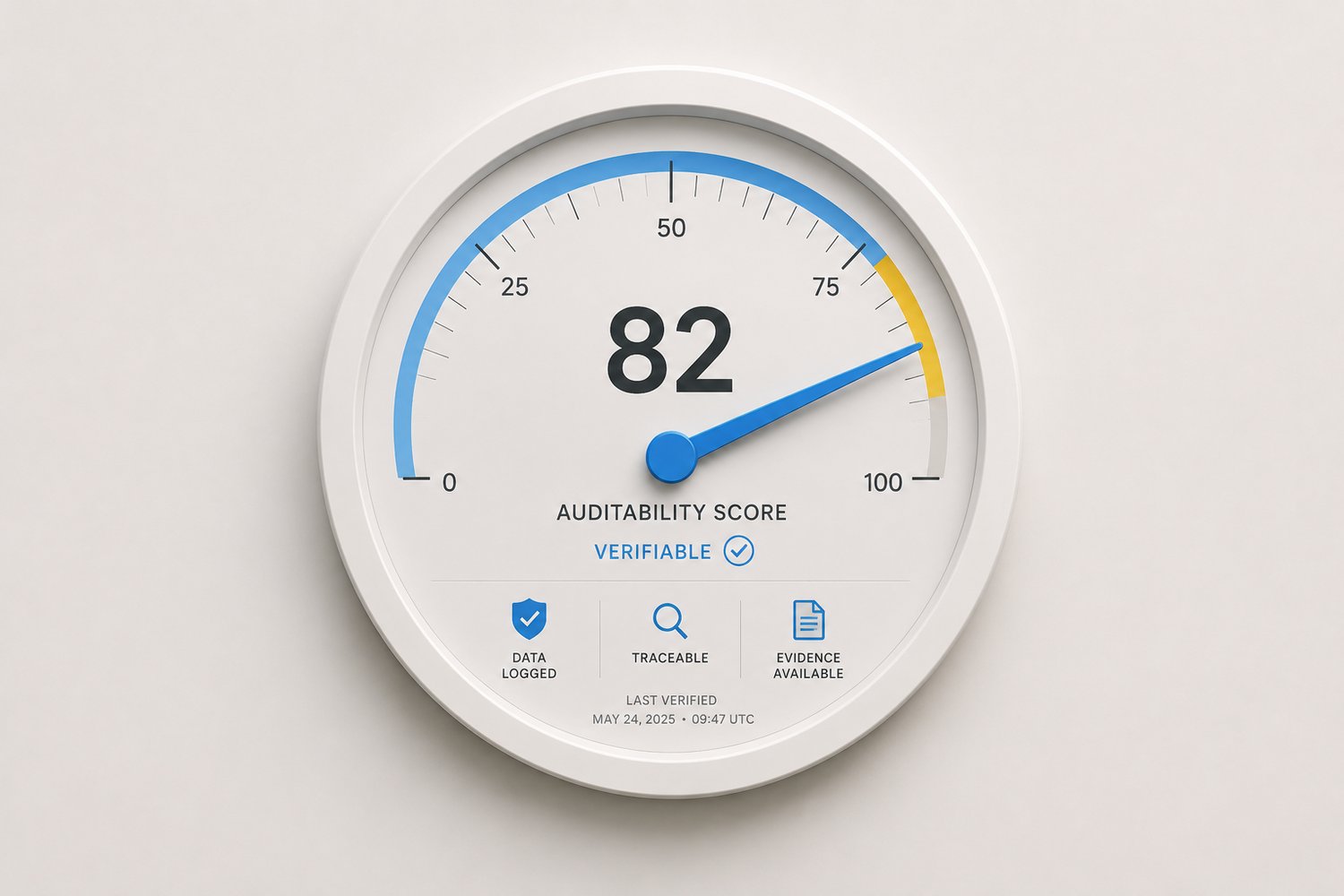 Is auditability the new uptime for AI?
Reliability engineering earned trust with uptime, a number anyone could verify. For AI decisions, the equivalent is auditability: the ability to reconstruct what happened and who was accountable. Why it becomes table stakes.
25 June 2026↗
Is auditability the new uptime for AI?
Reliability engineering earned trust with uptime, a number anyone could verify. For AI decisions, the equivalent is auditability: the ability to reconstruct what happened and who was accountable. Why it becomes table stakes.
25 June 2026↗
 Does a bigger AI model mean a more trustworthy one?
Capability and trustworthiness are different axes. A bigger, more capable model is not a more trustworthy one. Why we conflate the two, and what trust actually tracks.
25 June 2026↗
Does a bigger AI model mean a more trustworthy one?
Capability and trustworthiness are different axes. A bigger, more capable model is not a more trustworthy one. Why we conflate the two, and what trust actually tracks.
25 June 2026↗
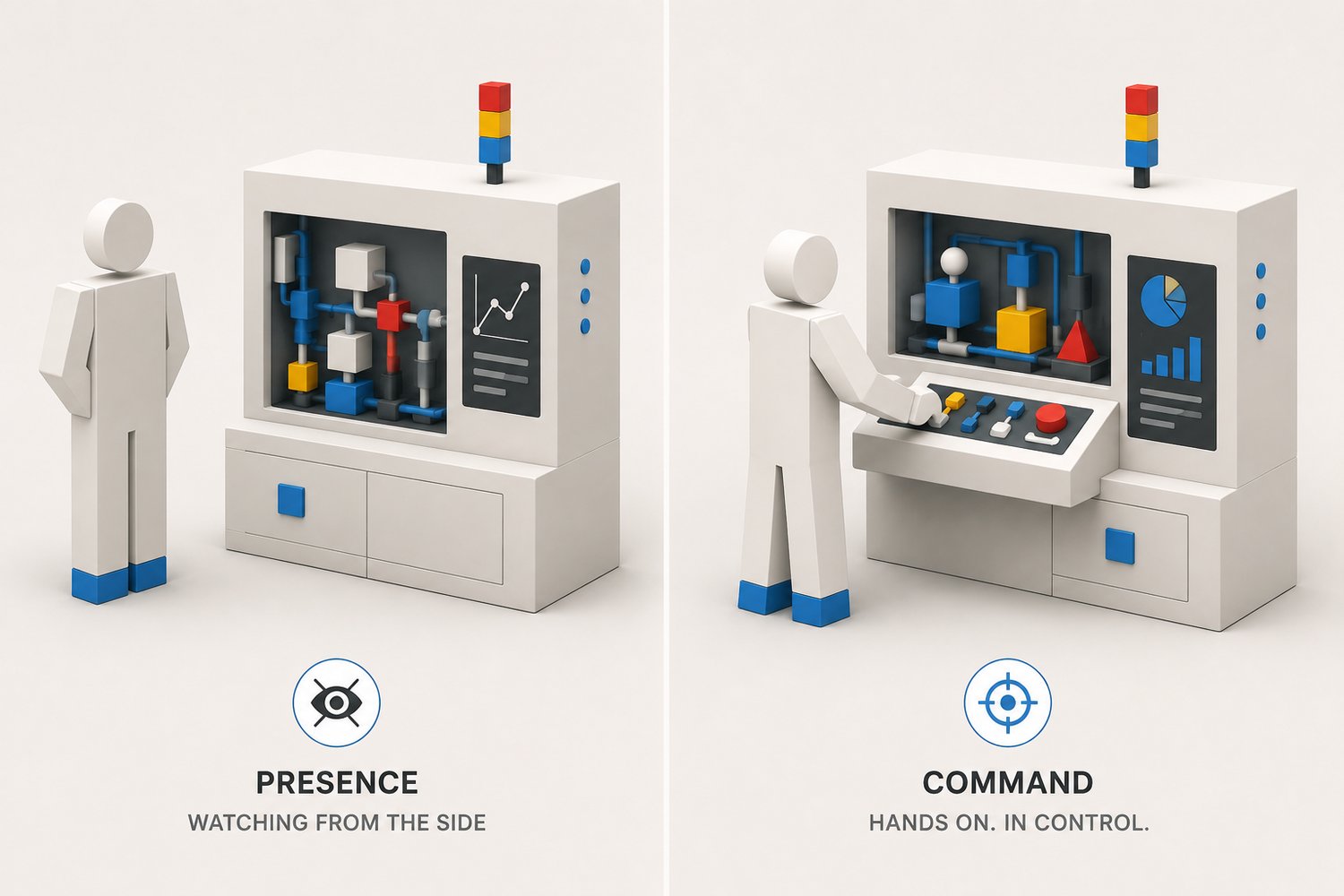 What is the difference between provable and performed oversight?
Performed oversight shows a human was present. Provable oversight should show a human exercised command. Why proving presence, even cryptographically, is not proving control, and what to measure instead.
25 June 2026↗
What is the difference between provable and performed oversight?
Performed oversight shows a human was present. Provable oversight should show a human exercised command. Why proving presence, even cryptographically, is not proving control, and what to measure instead.
25 June 2026↗
 Why do buyers no longer trust 'responsible AI' claims?
The distance between responsible-AI messaging and real practice has produced a trust deficit. Buyers discount the claim on sight. How the deficit formed, and the only thing that closes it.
25 June 2026↗
Why do buyers no longer trust 'responsible AI' claims?
The distance between responsible-AI messaging and real practice has produced a trust deficit. Buyers discount the claim on sight. How the deficit formed, and the only thing that closes it.
25 June 2026↗
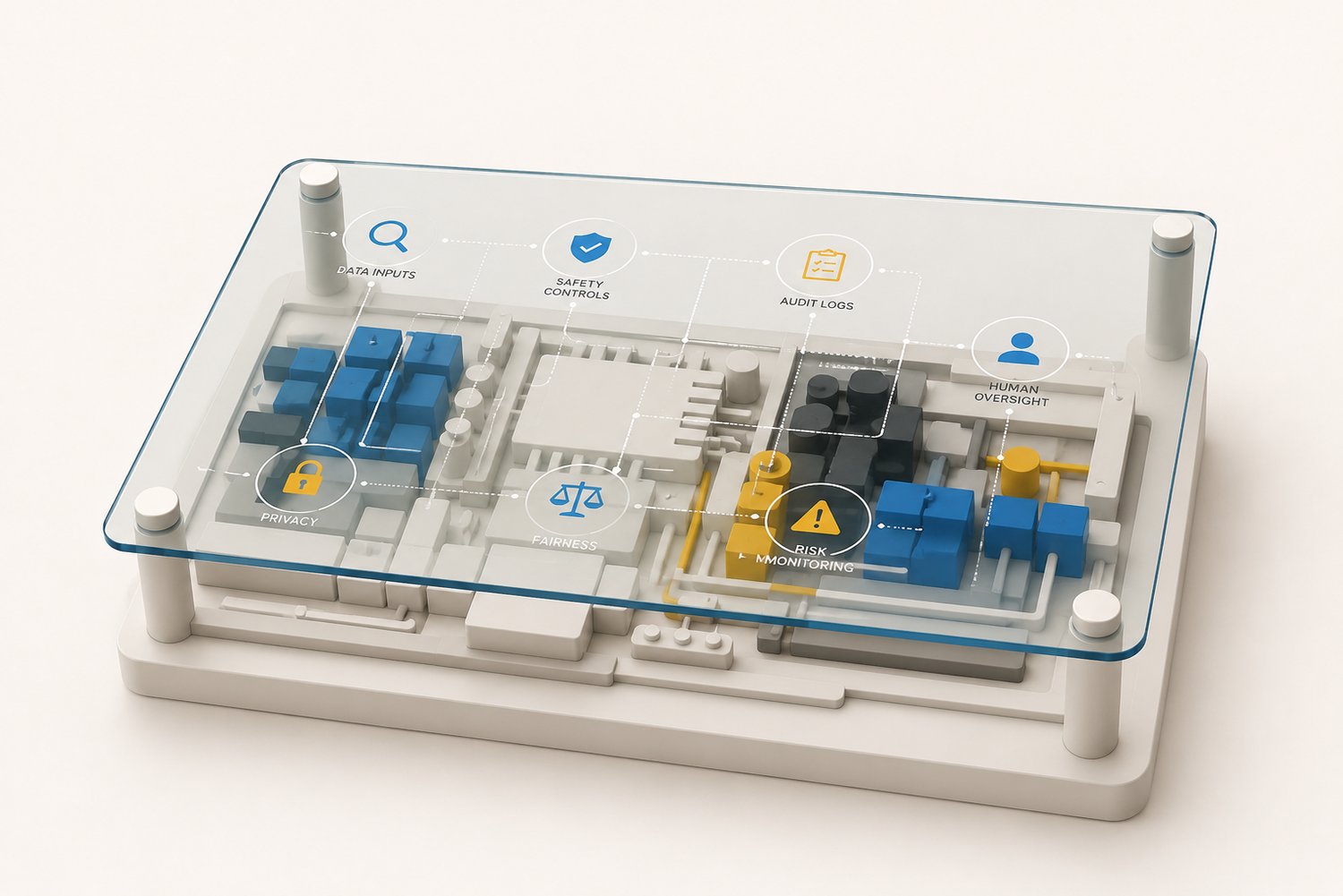 What is the trust layer for AI?
The trust layer for AI is the part of a system that makes its decisions auditable and accountable, so trust rests on evidence a third party can check rather than on the vendor's word.
25 June 2026↗
What is the trust layer for AI?
The trust layer for AI is the part of a system that makes its decisions auditable and accountable, so trust rests on evidence a third party can check rather than on the vendor's word.
25 June 2026↗
 How do you earn trust in an AI system?
Trust in AI is not a slogan you apply at the end. It is a property you build in and can prove: oversight that is real, decisions that are auditable, and recourse that works.
25 June 2026↗
How do you earn trust in an AI system?
Trust in AI is not a slogan you apply at the end. It is a property you build in and can prove: oversight that is real, decisions that are auditable, and recourse that works.
25 June 2026↗
 Trustworthy AI: what makes AI trustworthy, and how to prove it
Trustworthy AI is not a label, it is a property you build and can show: real human oversight, auditability, and recourse. What the standards require and how to prove it.
25 June 2026↗
Trustworthy AI: what makes AI trustworthy, and how to prove it
Trustworthy AI is not a label, it is a property you build and can show: real human oversight, auditability, and recourse. What the standards require and how to prove it.
25 June 2026↗
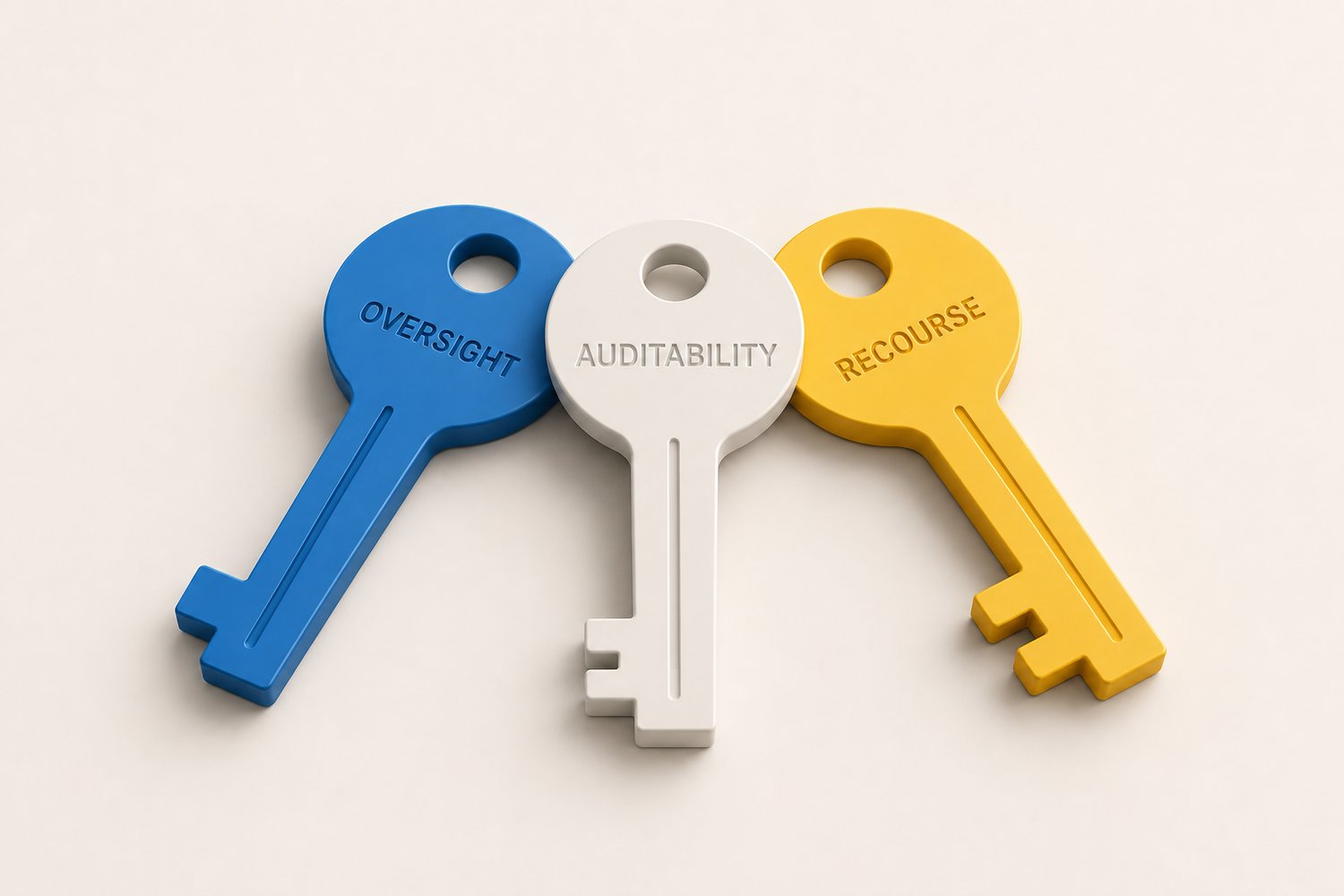 What does trustworthy AI actually require?
Trustworthy AI is a crowded phrase. Stripped of slogans, it rests on three concrete things: real human oversight, auditability, and recourse. What each requires, and why the label without them is empty.
25 June 2026↗
What does trustworthy AI actually require?
Trustworthy AI is a crowded phrase. Stripped of slogans, it rests on three concrete things: real human oversight, auditability, and recourse. What each requires, and why the label without them is empty.
25 June 2026↗
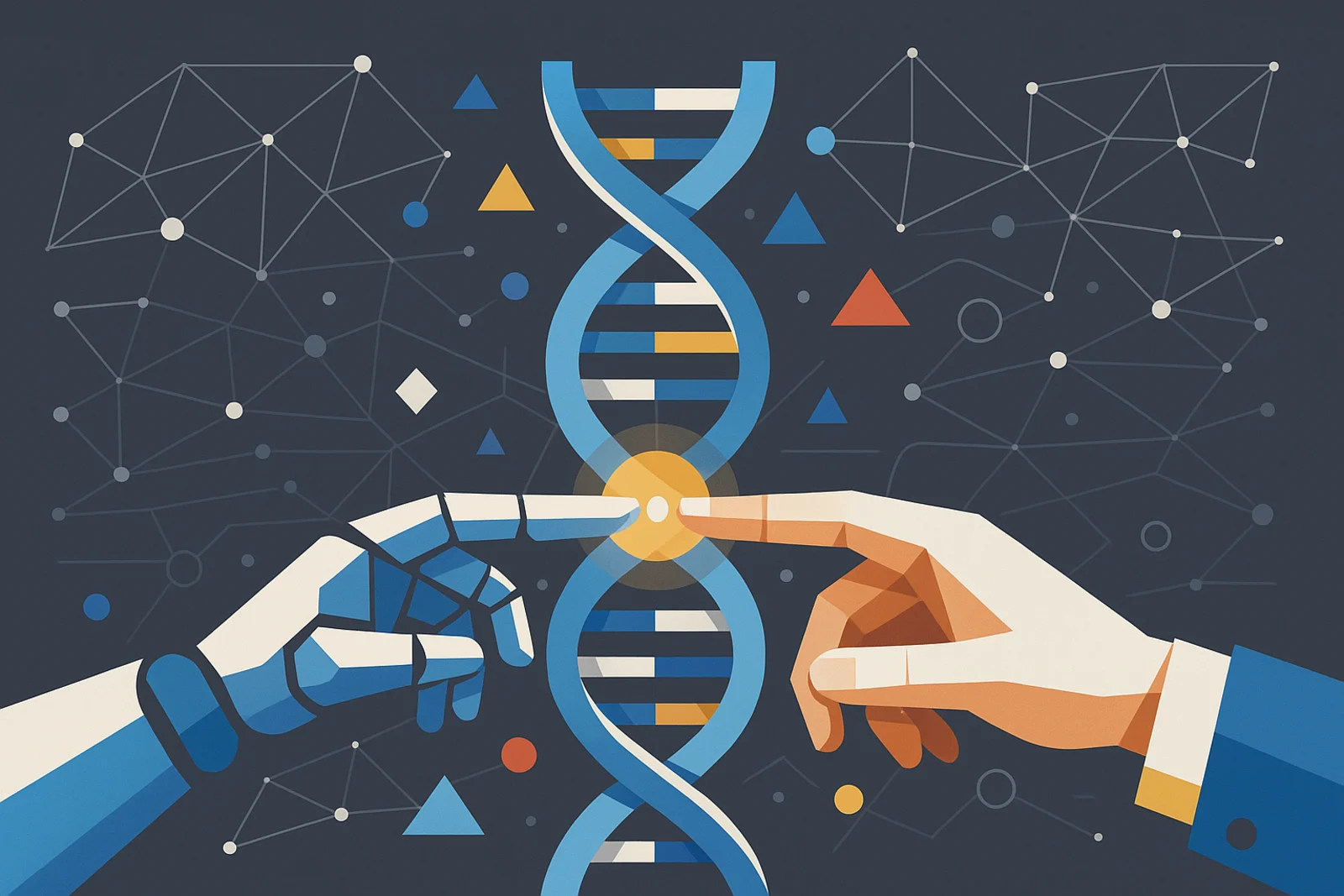 The School Where Humanity Teaches AI What Matters
Every day, without a whisper, AI plays an ever leading role in shaping who gets a loan, which résumé is shortlisted, what news is shown, how patients are prioritized, and even which laws…
3 May 2025↗
The School Where Humanity Teaches AI What Matters
Every day, without a whisper, AI plays an ever leading role in shaping who gets a loan, which résumé is shortlisted, what news is shown, how patients are prioritized, and even which laws…
3 May 2025↗
 How Algorithms Shrink Your World
We live in an age where algorithms decide what we watch, what we read, who we follow, and even what we believe.
19 April 2025↗
How Algorithms Shrink Your World
We live in an age where algorithms decide what we watch, what we read, who we follow, and even what we believe.
19 April 2025↗
 You’re Not Training AI. But It’s Still Making Choices for You.
It’s happening silently, but swiftly. AI is no longer just predicting your next click or completing your sentence.
18 April 2025↗
You’re Not Training AI. But It’s Still Making Choices for You.
It’s happening silently, but swiftly. AI is no longer just predicting your next click or completing your sentence.
18 April 2025↗
 Why AI Ethics Goes Beyond Algorithms
You can’t talk about AI anymore without someone bringing up ChatGPT. Or maybe Midjourney. Or that image you saw last week of the Pope in a Balenciaga puffer coat.
11 April 2025↗
Why AI Ethics Goes Beyond Algorithms
You can’t talk about AI anymore without someone bringing up ChatGPT. Or maybe Midjourney. Or that image you saw last week of the Pope in a Balenciaga puffer coat.
11 April 2025↗
 AI's Mirror Effect: The Undisclosed Agenda Behind Personalisation
Personalization is one of AI’s most praised features. And for good reason. It remembers your preferences. It adapts to your tone. It allows you to pick up conversations where you left off.
9 April 2025↗
The Shortcut Economy: AI in the Job Market and the Death of Differentiation
The job market today is a strange contradiction. On one hand, we have record-breaking levels of global talent, tools that let you apply to hundreds of jobs a day, and AI assistants capable…
8 April 2025↗
AI's Mirror Effect: The Undisclosed Agenda Behind Personalisation
Personalization is one of AI’s most praised features. And for good reason. It remembers your preferences. It adapts to your tone. It allows you to pick up conversations where you left off.
9 April 2025↗
The Shortcut Economy: AI in the Job Market and the Death of Differentiation
The job market today is a strange contradiction. On one hand, we have record-breaking levels of global talent, tools that let you apply to hundreds of jobs a day, and AI assistants capable…
8 April 2025↗
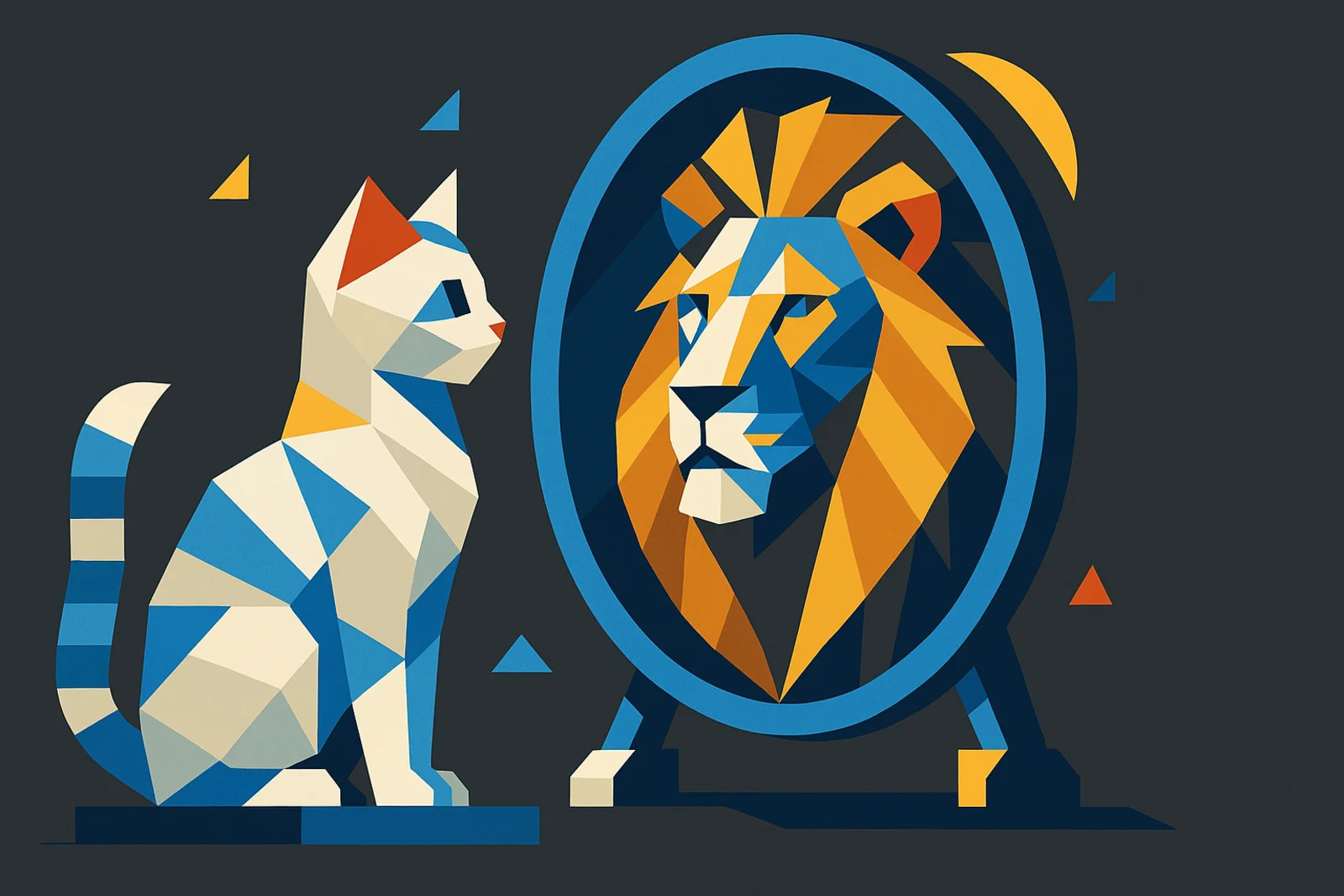 The Illusion of Mastery: How AI Is Replacing Learning with Performance
We’ve entered an era where anyone can appear to know, without truly understanding. Students can now write essays they didn’t think through, solve equations they never studied, and ace…
7 April 2025↗
The Illusion of Mastery: How AI Is Replacing Learning with Performance
We’ve entered an era where anyone can appear to know, without truly understanding. Students can now write essays they didn’t think through, solve equations they never studied, and ace…
7 April 2025↗
 AI is almost a drug and here’s why
We are in the early days of a powerful transformation. AI is no longer just a tool that assists you when called upon.
23 March 2025↗
AI is almost a drug and here’s why
We are in the early days of a powerful transformation. AI is no longer just a tool that assists you when called upon.
23 March 2025↗
 Morality vs. Ethics: What’s the Difference?
We often hear these two words morality and ethics used interchangeably, as if they’re the same concept in different disguises.
2 March 2025↗
Morality vs. Ethics: What’s the Difference?
We often hear these two words morality and ethics used interchangeably, as if they’re the same concept in different disguises.
2 March 2025↗